
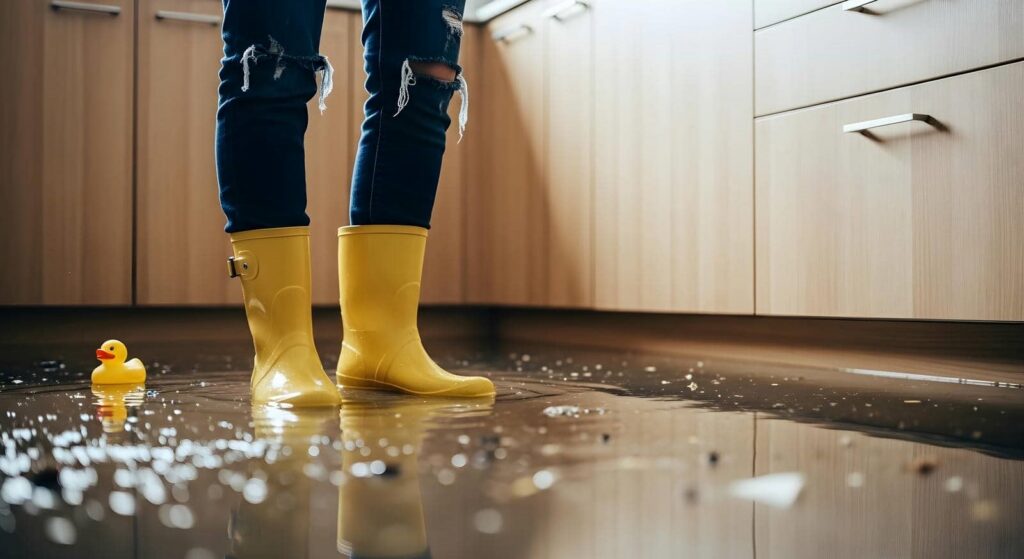
Before you start cleaning up a flooded house, you need to shut off the main water supply and electrical power to eliminate immediate hazards. Then you can assess how much standing water remains, which materials have been damaged, and what must come out first. Speed matters here, because moisture spreads into walls, floors, and hidden spaces fast, and the next steps depend on what you find.
Key Takeaways
- Shut off electricity and gas first, then inspect the house only when it is safe.
- Remove standing water with pumps or wet vacs, working in sections and documenting water levels.
- Remove damaged debris and materials quickly, wearing protective gear and keeping pathways clear.
- Dry the structure immediately using fans, dehumidifiers, open windows, and lifted carpets or floor coverings.
- Clean all affected surfaces with detergent and disinfectant, then monitor for mold and low humidity.
Shut Off Water and Electrical Hazards
Before you enter the flooded area, shut off the main water supply if you can do so safely, and cut power at the breaker panel or utility disconnect to eliminate electrical hazards.
Verify that gas service is isolated if you smell gas or hear hissing. Wear insulated boots and gloves, and keep your hands dry when you inspect controls.
If you can’t reach switches without crossing water, call emergency contacts and wait for trained responders. Mark the area so no one else enters, and brief your household on safety precautions before cleanup begins.
Use a flashlight, not candles, to assess conditions. If water has contacted outlets, appliances, or cords, treat the system as energized until a qualified professional confirms it’s safe.
Stay with your team and communicate clearly.
Remove Standing Water From the Flooded House
Start removing standing water as soon as the area is electrically safe and you’ve confirmed the structure can support entry. You should act methodically, because every minute of delay raises moisture damage and stress.
Choose pump options based on depth: submersible pumps for deep water, utility pumps for lower levels. Use water extraction techniques that match the floor surface, then finish with wet vacuums for thin films.
- You’ll regain control faster.
- You’ll reduce hidden saturation.
- You’ll protect your home’s recovery.
- You’ll join others who respond decisively.
Keep discharge hoses clear of the house, monitor flow continuously, and move in sections. Wear boots and gloves, and document water levels as you work.
When the water’s gone, you’re ready for the next repair phase.
Remove Damaged Materials and Debris
Pull out damaged materials and loose debris as soon as the area is safe to enter. You’ll protect your crew and your home by sorting items into keep, clean, or discard piles.
Wear gloves, boots, eye protection, and a mask, and follow safety precautions for nails, sharp metal, broken glass, and contaminated insulation. Remove soaked drywall, carpet, pad, baseboards, ceiling tiles, and warped particleboard that can’t be salvaged.
Bag small debris, wrap heavy pieces, and label waste clearly. Use approved disposal methods for flood-damaged materials, since local rules may limit curbside pickup.
Move debris out in stages so you can inspect each room and maintain clear access paths. Work methodically, and you’ll keep the cleanup organized, efficient, and safe for everyone involved.
Dry Walls, Floors, and Hidden Spaces
Once the debris is out, dry the structure immediately to prevent mold, rot, and further material breakdown.
You’ll move fast, using drying techniques that target walls, floors, and hidden spaces together. Open windows, run dehumidifiers, and position air movers to push damp air out of cavities and across surfaces.
During wall inspections, check baseboards, drywall seams, and trim for swelling or softness. Pull back carpet edges and lift floor coverings so trapped moisture can escape.
- You protect your home’s backbone.
- You keep your crew’s efforts focused.
- You reduce the sting of loss.
- You help everyone feel the place coming back.
Inspect closets, under stairs, and behind appliances, because moisture hides where people least expect it.
Clean Surfaces and Prevent Mold Growth
With the structure dry, clean every affected surface before mold can take hold. You should start with hard surfaces, then move to porous items you can salvage.
Use warm water, detergent, and a scrub brush for surface cleaning, rinsing as you go. Work in sections so you don’t miss hidden residue that feeds mold.
Wear gloves, eye protection, and a mask, and keep ventilation moving. After washing, apply a disinfectant labeled for flood recovery, following the contact time exactly.
Dispose of materials that stay damp, smell musty, or show growth. For strong mold prevention, keep indoor humidity low with fans and dehumidifiers, and inspect corners, baseboards, and cabinets daily.
You’re rebuilding safely now, step by step, with control and confidence.
Frequently Asked Questions
How Soon Should Insurance Be Notified After Flooding?
You should notify your insurer immediately, ideally within 24 hours, to protect your claim timeline. Prompt flood insurance notice helps you document damage, meet policy requirements, and stay connected with your adjuster.
Can Floodwater Contamination Make Food Unsafe to Eat?
Yes—floodwater contamination can turn food unsafe, like a hidden storm in your pantry. You should discard anything touched by floodwater; contamination risks compromise food safety, and you deserve a kitchen you can trust.
Should I Keep Photos of Flood Damage for Claims?
Yes, you should keep photos for claims; they strengthen insurance documentation and support property assessment. You’ll document damage clearly, speed adjuster review, and protect your payout. Store dated images, backups, and notes securely.
When Is It Safe to Return Home After a Flood?
You’re safe when officials clear you; FEMA says 1 inch of floodwater can contaminate 100 square feet. Complete flood damage assessment first, then follow returning home guidelines, verify utilities, and inspect structure before entering.
Do I Need Professional Help for Sewage-Contaminated Flooding?
Yes—if sewage contaminated the floodwater, you should hire professionals. Sewage cleanup demands protective equipment, containment, and disinfectants to reduce health risks. You’ll protect your home, your family, and your recovery by acting quickly.
Wrap-Up
By shutting off hazards, pumping out water, clearing debris, drying every hidden cavity, and disinfecting surfaces, you’ve guided your flooded house back from the brink. Think of each step as pulling a thread through a tangled net: methodical, precise, and necessary. Don’t rush the final dry-down, because lingering moisture can seed mold like embers in ash. Stay vigilant, keep humidity low, and you’ll restore a safer, cleaner home, one measured action at a time.