
When you spot a ceiling leak, you need to follow Leak Mitigation Steps in a specific order to limit damage and reduce risk. You’ll move valuables clear, catch active drips, and relieve trapped water before the ceiling sags further. Then you’ll dry the area thoroughly to slow mold growth. If the source isn’t obvious or the leak returns, a licensed plumber or roofer should inspect it, because the next step can determine how costly this becomes.
Key Takeaways
- Move furniture, electronics, and rugs away from the leak area to prevent damage.
- Place a bucket or tarp under the drip and document the leak with photos.
- Shut off the affected water supply or main line if it is safe to do so.
- If a ceiling is sagging, drain it carefully from the lowest point to relieve water pressure.
- Dry the area with fans and a dehumidifier, and call a professional if the source is unclear.
Stop a Ceiling Leak Fast
When you spot a ceiling leak, act immediately to limit water damage: move furniture and electronics away from the area, place a bucket or tarp under the drip, and, if it’s safe to do so, shut off water to the affected line or the main supply.
Next, inspect the ceiling for bulging, staining, or active dripping, and trace leak sources above the damaged area. Check plumbing joints, supply lines, vents, and roof penetrations.
Use temporary fixes only to control flow, such as wrapping a pipe joint with self-fusing tape or tightening an accessible fitting. Avoid cutting into the ceiling unless you can isolate the source and you’re trained to do so.
Document the leak with photos, then contact a qualified technician or roofer so you can restore the system safely and keep your space protected.
Protect Furniture and Floors
Move furniture, rugs, and electronics out of the leak zone as soon as possible to prevent staining, warping, and electrical damage.
Then place plastic sheeting, tarps, or a waterproof floor covering under exposed legs and traffic paths. For furniture protection, wrap wooden surfaces in breathable cloth before adding a barrier layer, and elevate items on blocks if moisture has already reached the floor.
Keep heavy pieces away from saturated areas so you don’t trap water or crush softened flooring. Mark the perimeter of wet zones with towels or tape so everyone in your home can avoid spreading damage.
Check seams, edges, and corners for seepage, and replace any damp floor covering immediately. This method keeps your space orderly, limits loss, and helps your household stay steady together.
Drain Ceiling Water Safely
If water is bulging the ceiling, act quickly and keep the area clear so the weight doesn’t worsen. You should shut off the source if you can access it, then place a bucket under the lowest point.
Use a screwdriver or utility knife to make a small relief hole at the center of the sag, keeping your face aside. Let the water drain in a controlled stream, and widen the opening only if pressure remains. Support the area with a sturdy container and plastic sheeting for water containment.
These drain techniques reduce collapse risk and limit spread. Keep people away, monitor for new drips, and call a professional if the ceiling sounds soft, cracks enlarge, or insulation begins to fall.
Dry the Ceiling After a Leak
Once the leak has stopped and standing water is drained, start drying the ceiling immediately to limit staining, mold growth, and material breakdown.
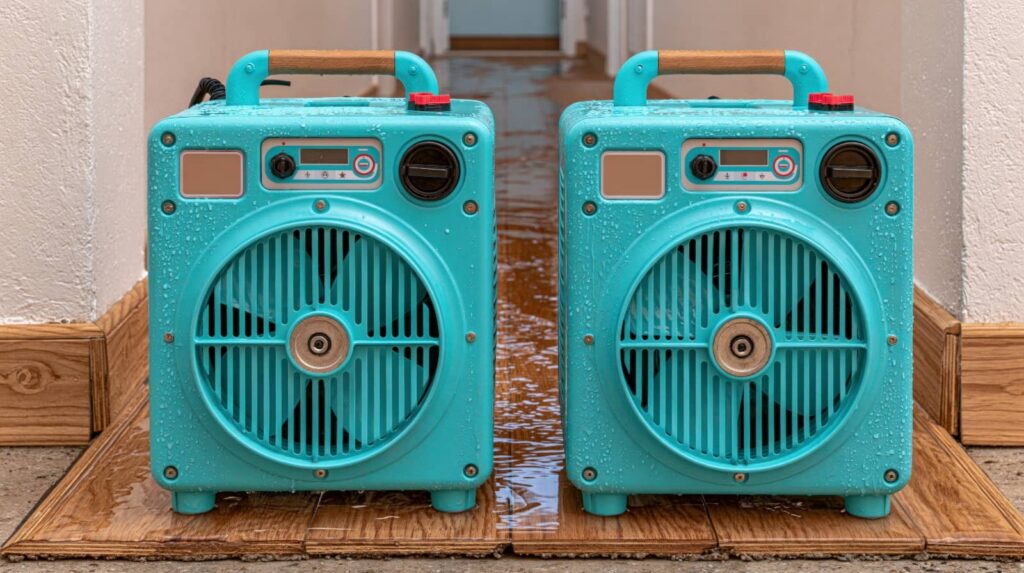
You should open windows if conditions allow, then run fans to move air across the damp surface. Use a dehumidifier to pull moisture from the room, and keep it close to the affected area.
Check the ceiling with moisture detection tools so you can track hidden wet spots behind paint or drywall. If you see sagging, bubbling, or discoloration, mark those areas for later repair techniques.
Stay consistent and keep the space dry until readings stabilize and the surface feels firm. By acting methodically, you protect your home and join the group of owners who handle leaks with confidence.
Call a Plumber or Roofer
When the leak source isn’t obvious or the damage keeps spreading, call a licensed plumber or roofer right away.
You’ll protect your home faster when a trained pro traces the intrusion path, checks flashing, pipes, vents, and seals, and verifies whether the failure is structural or plumbing-related.
Explain what you’ve already done, then ask for emergency repairs if water is still entering.
Request written cost estimates, including labor, materials, and follow-up drying or patching.
You should also ask how long the repair will take and whether temporary containment is needed.
Acting quickly helps you avoid mold, warped framing, and electrical hazards.
Stay with the process, document every step, and work with a contractor who communicates clearly so you feel confident, informed, and included.
Frequently Asked Questions
How Can I Detect Hidden Leak Damage Behind Walls?
You can detect hidden leak damage by using thermal imaging, moisture meters, wall inspection, and plumbing checks. You’ll spot temperature anomalies, elevated moisture, staining, and pressure loss early, helping you protect your home together.
What Tools Help Locate the Leak Source Quickly?
You can locate the source fast with thermal imaging and moisture meters. Test your hunch first; these tools quickly confirm or refute it, and you’ll pinpoint hidden leaks methodically, confidently, and with your team.
When Should I Contact My Insurance Company?
Contact your insurance company as soon as you confirm damage, before repairs start. Early notice preserves insurance coverage and streamlines the claim process. You’ll protect evidence, meet deadlines, and stay supported.
How Do I Tell if Mold Has Started Growing?
If you spot mold signs—musty odor, discoloration, or fuzzy patches—you’ve likely got growth conditions: moisture, warmth, and poor ventilation. Inspect hidden areas methodically, and you’ll feel confident you belong among informed, proactive homeowners.
Can I Prevent Future Leaks With Regular Inspections?
Yes, you can prevent future leaks with regular inspections. Routine maintenance and early detection help you spot worn seals, corrosion, and moisture paths before damage spreads, so you’ll protect your space and belong to a prepared community.
Recap
If you spot a ceiling leak, act fast: move furniture, set a bucket under the drip, and drain any trapped water with a small relief hole. Then dry the area with fans and a dehumidifier to limit mold. For example, if water stains spread after a storm, these steps can stop the damage from worsening while you wait for repairs. If the leak persists, you’ll need a plumber or roofer to fix the source.