Many mold claims start with hidden moisture behind walls or under flooring. You need structural drying to remove that trapped water before it feeds microbial growth. This process uses controlled dehumidification, air movement, and temperature management to dry materials to safe levels. If you’ve had a leak, flood, or high humidity event, the next steps can determine whether you stop mold early or face a larger remediation problem.
Key Takeaways
- Structural drying is the controlled removal of moisture from building materials after water damage.
- It helps prevent mold by lowering dampness below the levels mold needs to grow.
- It targets hidden moisture in drywall, framing, flooring, insulation, and other trapped spaces.
- The process uses dehumidifiers, air movers, temperature control, and moisture monitoring.
- Quick structural drying reduces odors, staining, and hidden deterioration while restoring safe indoor conditions.
What Is Structural Drying?
Structural drying is the controlled removal of moisture from building materials and structural components after a water intrusion event. You use it to limit water damage and reduce conditions that support mold growth.
The process targets hidden moisture in drywall, framing, flooring, and insulation, so you don’t leave damp materials behind. You’ll typically apply drying techniques such as dehumidification, air movement, temperature control, and moisture monitoring.
Each method works together to restore normal material content efficiently and safely. When you understand structural drying, you can respond with confidence and protect your space as part of a community that values healthy buildings.
Proper drying also helps preserve structural integrity, shorten recovery time, and support a cleaner indoor environment after loss.
Signs Your Home Needs Structural Drying
If your home has recently had a leak, flood, plumbing failure, or roof intrusion, you need to inspect for signs that materials are still holding moisture.
Look for warped flooring, swollen baseboards, peeling paint, stained drywall, and a persistent musty odor.
Check carpet padding, insulation, and hidden cavities for dampness after water damage. If surfaces feel cool, soft, or sponge-like, the structure may still need drying.
You should also monitor humidity spikes, repeated condensation, and darkened framing around windows, ceilings, and crawl spaces. These conditions show moisture control isn’t complete.
Act quickly if you see recurring discoloration or hear cracking from drying materials.
Your home belongs to a healthier standard when you verify dryness before repairs continue.
How Structural Drying Stops Mold Growth
Mold grows when damp materials stay wet long enough for spores to germinate, so structural drying interrupts that process by reducing moisture below the level mold needs to spread.
You protect your space by removing trapped water from walls, floors, and framing before spores can anchor and multiply. This breaks the mold lifecycle at its most vulnerable stage: active growth.
With consistent moisture control, you lower humidity, limit surface condensation, and keep building materials stable enough to resist colonization. You also reduce odor, staining, and hidden deterioration that can affect your household’s comfort and confidence.
When you act quickly and methodically, you join other homeowners who prioritize clean, dry structures and prevent small wetting events from becoming larger remediation problems.
Essential Structural Drying Equipment
Core drying equipment turns a wet building into a controlled drying environment by moving air, removing moisture, and measuring progress.
You’ll rely on dehumidifier types matched to the space: refrigerant units for warm, damp areas and desiccant units for cooler or low-humidity conditions. Choose enough capacity to keep relative humidity within target range.
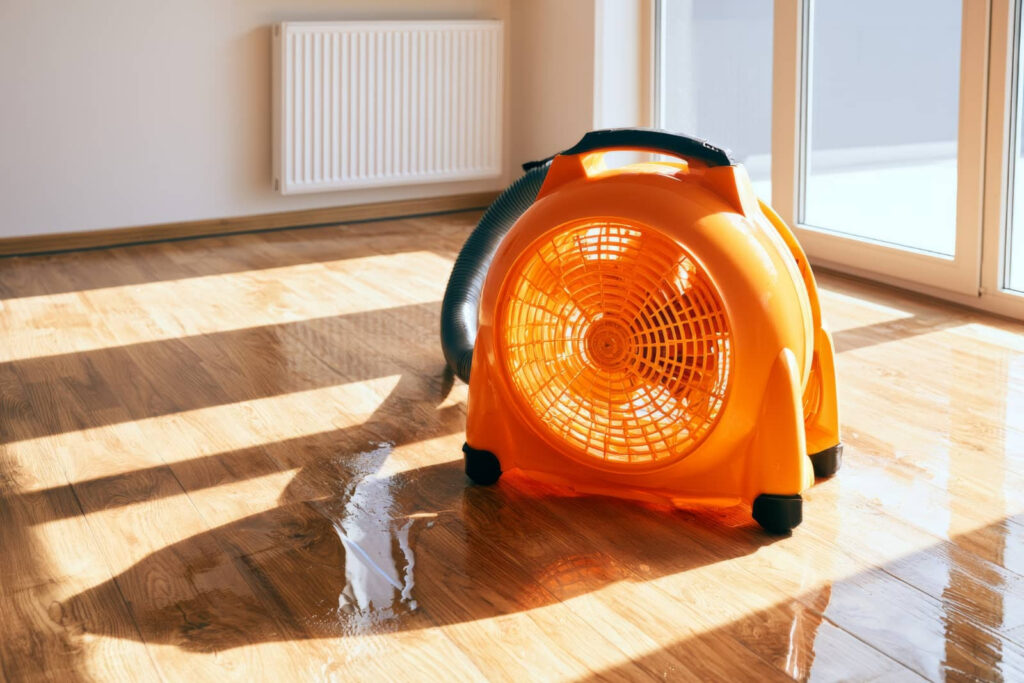
Position air movers to sweep wet surfaces, break boundary layers, and speed evaporation; the air mover benefits include faster drying, more even moisture removal, and reduced risk of lingering damp pockets.
Use moisture meters and thermo-hygrometers to verify conditions daily, so you can adjust placement and output with confidence.
When you set equipment correctly, you’re working with a proven drying team that protects the structure and helps your space return to normal sooner.
What Happens During Structural Drying?
Once the equipment is in place, structural drying starts by pulling excess moisture out of the building materials and the air around them.
You’ll see technicians map moisture levels, set airflow, and balance temperature and humidity so materials release trapped water damage efficiently. They monitor walls, subfloors, and framing with meters, then adjust drying techniques as conditions change.
If moisture remains in hidden cavities, they may drill access points or open affected areas to improve evaporation. You stay informed through regular readings, and that helps you know the structure is moving toward safe dryness.
The goal is to stop microbial growth, protect finishes, and return your space to normal with confidence.
Frequently Asked Questions
How Long Does Structural Drying Usually Take?
Usually, you’ll need 3–5 days for structural drying, though severe saturation can take longer. You’ll use drying techniques and drying equipment to monitor moisture, adjust airflow, and verify the structure’s safe, complete restoration.
Can Structural Drying Reduce Repair Costs After Water Damage?
Yes, structural drying can reduce repair costs after water damage. You’ll limit secondary damage, speed restoration, and improve cost efficiency. Acting quickly also delivers long term benefits, helping you protect your property and community.
Is Structural Drying Safe for Occupants During the Process?
Yes, you’re usually safe during structural drying if professionals monitor air quality and place drying equipment correctly. You should avoid active zones, keep children and pets away, and follow instructions to support a comfortable recovery.
Does Insurance Typically Cover Structural Drying Services?
Usually, your insurance policies cover structural drying if a covered water loss caused the damage, but coverage limits apply. You’ll need to document the loss, call your insurer quickly, and follow their claim instructions.
Can Structural Drying Prevent Future Odors From Water Damage?
Yes, you can reduce future odors from water damage by drying materials quickly and thoroughly. You’ll limit mold growth, support odor removal, and protect your space with proper dehumidification, airflow, and moisture monitoring.
Recap
Structural drying is your first defense after water intrusion. You remove hidden moisture from drywall, flooring, and insulation before mold can take hold. With dehumidifiers, air movers, and careful temperature control, you restore safe humidity and protect building materials. Think of it as pressing pause on mold’s growth cycle. If you act quickly and dry thoroughly, you’ll reduce damage, preserve indoor air quality, and keep your home structurally sound.