
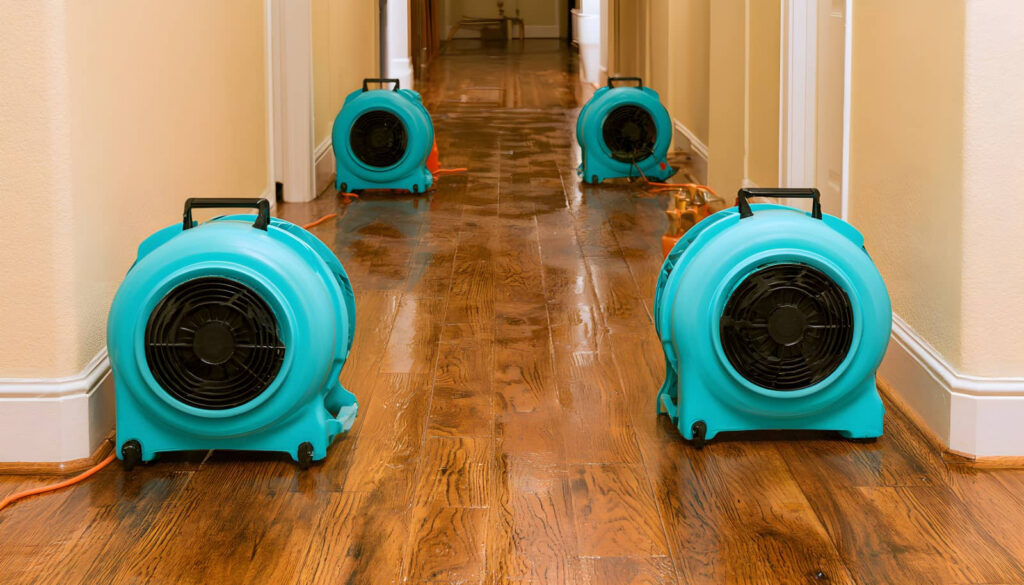
Nearly half of indoor mold problems start after water damage, so effective mold prevention depends on acting fast. You should start drying the structure right away by removing soaked materials and opening doors to improve airflow. Next, place fans and dehumidifiers where they’ll move air across wet surfaces. Then check hidden spaces for trapped moisture, because mold can start before the surface feels dry.
Key Takeaways
- Start drying immediately by removing soaked materials, wiping standing water, and opening wet cabinets and closets.
- Improve airflow with fans aimed low toward open exits and keep doors open between affected rooms.
- Use dehumidifiers in the dampest rooms and empty tanks regularly to keep moisture removal efficient and mold prevention on track.
- Check hidden moisture with detectors, including under sinks, behind walls, and around windows or roofs.
- Monitor damp areas daily, lift rugs and inspect soft spots, and act fast if moisture remains high to support mold prevention.
Start Drying the Structure Immediately
As soon as you can safely enter the area, start drying the structure immediately to limit further damage and mold growth. You need immediate action because every hour counts after water intrusion.
Remove soaked materials you can discard, open wet cabinets, and wipe visible standing water from hard surfaces. If you’re part of a team, assign simple tasks so everyone works with purpose and no one feels lost.
Check hidden spaces like closets, under sinks, and behind furniture, because trapped moisture can spread fast. Keep doors open between affected rooms to improve airflow.
Focus on the dampest areas first for quick results, then recheck them often. Acting now helps you protect your space, reduce losses, and stay ahead of mold before it takes hold with smart mold prevention.
Place Fans and Dehumidifiers Correctly
Set fans to move air across wet surfaces and point dehumidifiers toward the most humid rooms so they can pull moisture out efficiently.
You’ll dry faster when you keep fan positioning low and direct, not blasting air in circles. Aim each fan so it pushes moisture toward open exits or drier zones, and leave space around both tools for steady airflow.
Adjust dehumidifier settings to match the room size and humidity level, then empty the tank before it fills up.
If you’ve got a team at home, assign one person to check cords and another to watch airflow. Working together helps you stay on track, cut drying time, and support mold prevention throughout your space.
Check for Hidden Moisture for Better Mold Prevention
Even when surfaces feel dry, hidden moisture can stay trapped behind baseboards, under flooring, and inside walls. For reliable mold prevention, check these spots before mold starts. Use moisture detection tools to scan damp areas, then compare readings over a few days.
Look for hidden leaks around sinks, windows, roofs, and supply lines. If you smell musty air or notice peeling paint, act fast. Keep your space in the clear by opening access panels and checking insulation after water damage.
- Press walls for cool, soft spots.
- Inspect cabinets and closets for stains.
- Lift rugs and underlayments to confirm dryness.
- Call a pro if readings stay high.
When you stay alert, you help your home dry fully and protect everyone who shares it.
Frequently Asked Questions
How Do I Dry Clothes After a Flood?
Hang clothes outside in sunlight or inside with fans, space them out, and use low heat if needed. During flood recovery, you’ll need drying techniques that help your items dry fast and stay fresh.
Can I Use Bleach on Wet Drywall?
No, you shouldn’t use bleach on wet drywall; it won’t dry it and may damage drywall safety. You can clean exposed surfaces, but you’ll need to remove soaked drywall and improve ventilation fast.
What Causes Musty Odors Indoors?
Musty odors creep in like an unwelcome guest; you’re usually smelling mold growth, damp materials, or poor indoor humidity control. Check leaks, improve ventilation, and dry wet spots fast so your home feels fresh again.
How Often Should HVAC Filters Be Changed?
You should change your HVAC filters every 1 to 3 months for better filter maintenance and air quality. If you’ve got pets, allergies, or heavy use, check them monthly and replace them sooner.
Is It Safe to Stay in a Damp Room?
No, you shouldn’t stay in a damp room. If you wake coughing in one, leave now. Damp environment effects can trigger health risks, especially for kids or anyone with asthma. Dry it out fast.
Final Thoughts
If you start drying right away, you can stop a small problem from becoming mold, which is the heart of mold prevention. Ask yourself this: is the area truly dry, or just dry on the surface? Remove soaked materials, open doors, and aim fans and dehumidifiers across wet spots. Then check hidden spaces for lingering moisture, odors, or stains. When you verify every area is dry, you protect your structure and keep mold from taking hold through consistent mold prevention.