
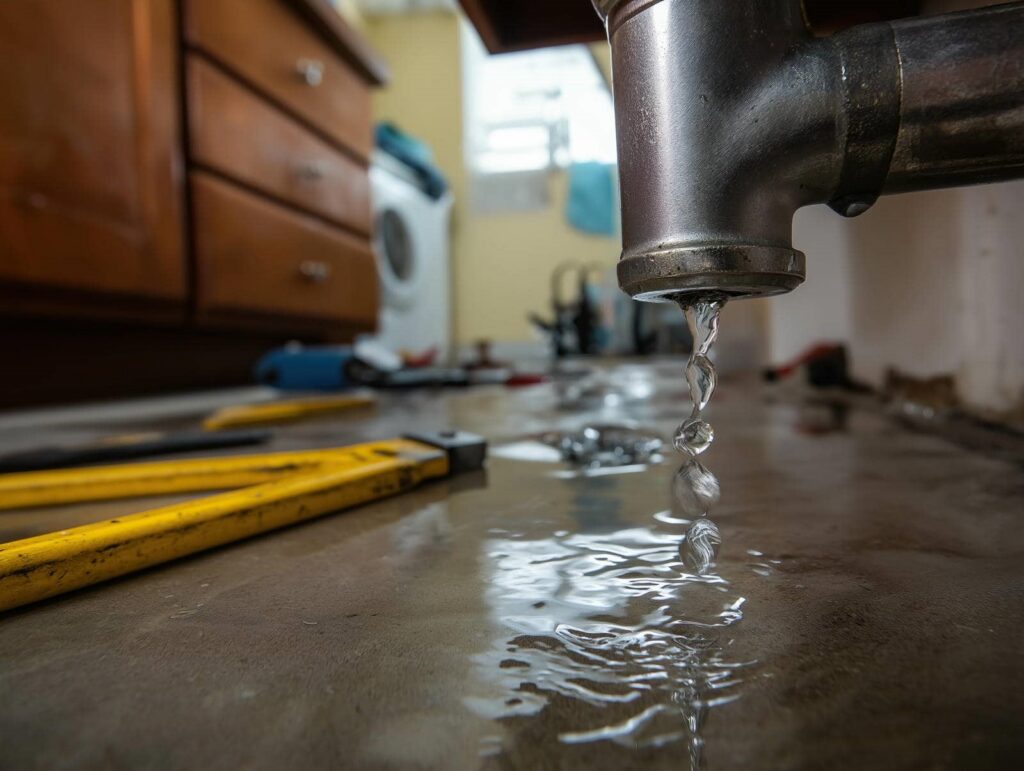
Did you know that water damage can cause structural issues in just 24 hours? When faced with a burst pipe, every second counts. Knowing how to respond quickly can greatly reduce the damage and prevent mold growth. From shutting off the water supply to effective cleanup techniques, understanding these steps can make all the difference. Let’s explore the essential actions you need to take immediately to protect your home.
Key Takeaways
- Shut off the main water supply immediately to prevent further flooding and damage.
- Remove standing water quickly using a wet/dry vacuum or mops.
- Inspect the area for hidden leaks and damage around plumbing fixtures.
- Increase airflow with fans and dehumidifiers to promote drying.
- Document all damage thoroughly for insurance purposes before cleanup.
Identifying Key Signs of Water Damage
When dealing with burst pipes, spotting water damage early can save you time and money. Look for water stains on ceilings, walls, and floors; these are often the first signs of trouble.
Discoloration or peeling paint indicates moisture intrusion that can compromise your home’s structural integrity. Check for musty odors, as they might signal hidden mold growth, which can exacerbate damage over time.
Don’t forget to examine areas around plumbing fixtures and appliances, since these spots are prone to leaks. Pay attention to warped or buckled materials, which can indicate prolonged exposure to water.
Immediate Actions for Water Damage: Stopping the Flow
Shut off the main water supply immediately to prevent further damage from a burst pipe. This quick action is essential in minimizing water loss and starting your emergency planning.
Once you’ve stopped the flow, follow these steps:
- Locate the source of the leak.
- Assess the extent of the damage.
- Contact a professional for pipe repair.
- Gather necessary supplies, like buckets and towels.
- Document the damage for insurance claims.
Essential Cleanup Steps: How to Remove Water and Moisture Safely
Begin the cleanup process by removing standing water as quickly as possible to prevent further damage and mold growth. Use a wet/dry vacuum for efficient water extraction. If you can’t access a vacuum, absorbent materials like towels or mops can help, but act fast.
Next, utilize moisture detection tools to identify hidden damp spots in walls and floors. Focus on areas around the burst pipe; they’re likely to retain moisture.
Once you’ve extracted visible water, increase airflow with fans and dehumidifiers to aid drying. Regularly check for residual moisture to ensure a thorough cleanup.
Tips to Prevent Mold Growth
After addressing visible water, it’s essential to take proactive measures to prevent mold growth.
Mold can start developing within 24-48 hours in damp environments, so focus on effective mold prevention and humidity control.
Here are some key steps to follow:
Ventilate: Open windows and use fans to increase airflow.
Dehumidify: Use a dehumidifier to maintain indoor humidity below 60%.
Inspect: Regularly check hidden areas like basements and attics for moisture.
Seal: Confirm windows and doors are properly sealed to prevent leaks.
Clean: Use a mixture of water and vinegar to wipe down surfaces prone to mold.
Signs You Need Professional Water Damage Help
When dealing with water damage, recognizing the signs that warrant professional help is essential. If you notice persistent moisture, discoloration on walls, or a musty odor, it’s time to act. These could indicate hidden damage that requires expert leak detection.
Additionally, if you see structural damage like warped floors or ceilings, don’t hesitate to call for assistance. It’s vital, especially if you’re considering insurance claims; professionals can document the damage accurately, ensuring you receive the coverage you deserve.
Frequently Asked Questions
How Can I Quickly Locate the Source of a Burst Pipe?
To quickly locate a burst pipe, use pipe inspection tools and leak detection methods. Check for damp spots, listen for hissing sounds, and monitor water pressure. These steps help you pinpoint the issue effectively.
What Common Household Items Can Help With Initial Water Absorption?
You can use water absorbing towels and absorbent mats for quick initial water absorption. These items effectively soak up excess water, helping you minimize damage and restore your space efficiently during a leak situation.
Are There Specific Tools Needed for Effective Water Removal?
For effective water removal, you’ll need specific tools like wet/dry vacuums, mops, and towels. Keep emergency supplies handy, ensuring you’re always prepared to tackle unexpected spills and restore your space swiftly.
How Long Does It Typically Take for Water Damage to Appear?
Water damage typically appears within 24 to 48 hours after a leak. Using moisture detection tools can help you identify hidden issues early, preventing further damage and ensuring a quicker, more effective response.
Can I Use a Regular Vacuum for Water Cleanup?
No, you can’t use a regular vacuum for water cleanup. Only specialized vacuum types designed for water extraction handle such tasks effectively, ensuring you avoid damage and promote efficient drying in your space.
Final Thoughts
In a burst pipe emergency, swift action transforms chaos into control. As you shut off the water and wield your wet/dry vacuum, imagine the water retreating like a tide. Opening windows invites fresh air, while dehumidifiers silently work to safeguard your home against mold’s creeping grasp. With each step, you’re not just cleaning—you’re reclaiming your space, ensuring it remains a sanctuary, not a soggy reminder of disaster. Don’t hesitate; your proactive measures today protect your home for tomorrow.