
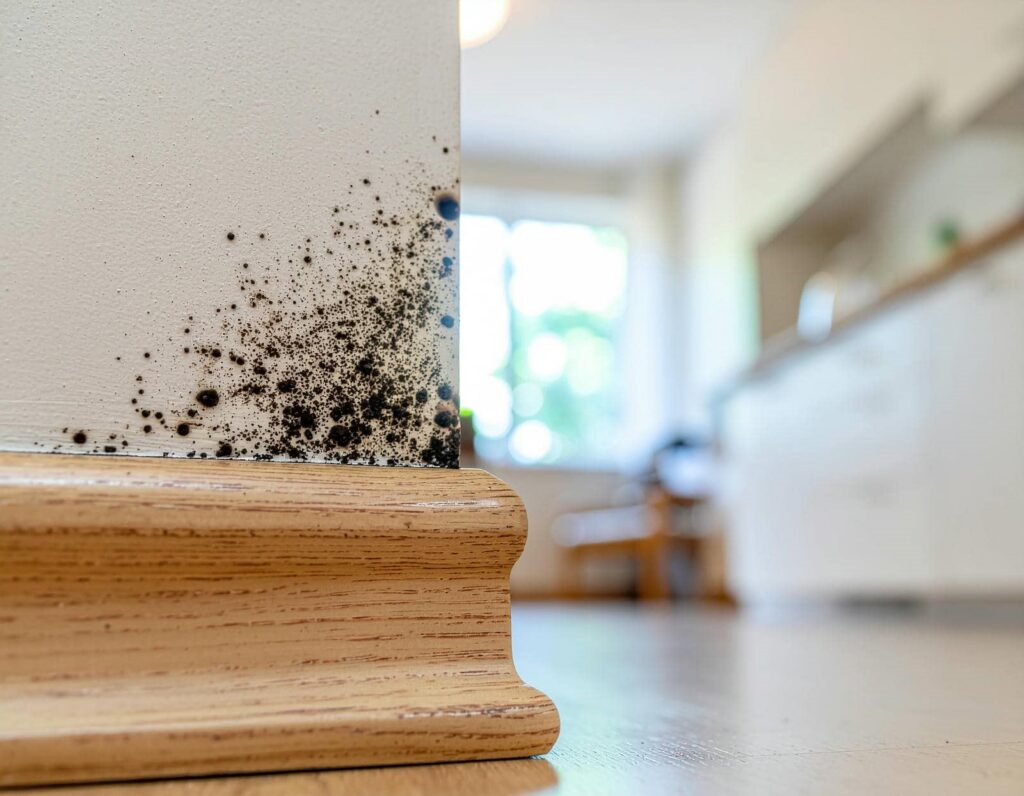
After a flood, you need to act quickly to prevent mold growth in your home. Mold can develop within 24-48 hours in damp conditions, making swift action crucial. You’ll want to identify affected areas, gather proper safety gear, and choose effective cleanup products. Knowing how to tackle the situation methodically will safeguard your health and property. But where do you start, and what specific steps should you follow to guarantee thorough mold removal?
Key Takeaways
- Act quickly to remove water and moisture from affected areas to prevent mold growth.
- Use EPA-registered mold remover sprays and stiff brushes for effective cleanup of surfaces.
- Remove and discard contaminated materials, such as drywall and carpets, to minimize health risks.
- Ensure proper ventilation and use dehumidifiers to maintain humidity levels between 30-50%.
- Wear protective gear, including gloves and masks, to safeguard against mold exposure during cleanup.
How to Identify Mold Risks After a Flood
After a flood, it’s crucial to assess your home for potential mold risks, as even a small amount of moisture can lead to significant problems.
Start your flood damage assessment by inspecting areas prone to dampness, such as basements and crawl spaces. Use mold identification techniques like visual inspections for discoloration or musty odors.
Check behind walls and under carpets, as mold often hides in less visible places. Don’t forget to assess your HVAC systems, as they can circulate spores throughout your home.
If you find mold or suspect moisture, act quickly to mitigate the risks. Remember, prompt action not only protects your home but also fosters a safe environment for you and your loved ones.
Essential Safety Gear for Mold Cleanup
When tackling mold cleanup, wearing the right safety gear is essential.
You’ll need protective clothing to shield your skin, respiratory protection to guard against inhaling spores, and eye protection to prevent irritation.
Ensuring you have the appropriate equipment can help minimize health risks during the cleanup process.
Protective Clothing Requirements
Mold cleanup requires at least three essential pieces of protective clothing to guarantee your safety during the process.
First, wear a durable, long-sleeved shirt and pants to shield your skin from direct contact with mold spores.
Second, opt for rubber gloves to prevent contamination risks while handling materials.
Finally, invest in waterproof boots to protect your feet from damp environments.
These pieces of protective gear are important in minimizing exposure to potentially harmful substances.
Remember, mold can pose serious health risks, so it’s imperative to prioritize your safety.
Respiratory Protection Essentials
In any mold cleanup scenario, having the right respiratory protection is essential for your safety. You need to choose appropriate mask types that offer high filtration efficiency to protect against mold spores.
Here’s what to take into account:
N95 Respirators: Effective for filtering out at least 95% of airborne particles.
Half-Face Respirators: Provide a tighter seal and can accommodate replaceable filters.
Full-Face Respirators: Offer complete protection, covering the eyes and face.
P100 Respirators: Filters out 99.97% of airborne particles, ideal for heavy mold exposure.
Powered Air-Purifying Respirators (PAPRs): Deliver clean air through a battery-operated blower.
Selecting the right mask will help minimize health risks while you clean, ensuring you’re safeguarding yourself effectively.
Eye Safety Measures
While tackling mold cleanup, prioritizing eye safety is essential to prevent irritation and long-term damage. Mold spores can easily become airborne, posing a risk to your vision.
It’s vital to wear appropriate eye protection, such as safety goggles or face shields, to shield your eyes from contaminants. Make sure your gear fits well and provides a full seal to block out particles effectively.
Remember, even if you think you’re just doing a quick job, it only takes a moment for spores to irritate your eyes. Keeping your vision safety in mind not only protects you during cleanup but also fosters a sense of community responsibility.
Best Products for Effective Mold Cleanup
When tackling mold cleanup after a flood, selecting the right products is vital for effectiveness.
You’ll want to take into account both essential mold removal solutions and natural cleaning alternatives to suit your needs.
Understanding these options will help you make informed choices to guarantee a thorough cleanup.
Essential Mold Removal Products
Effective mold cleanup requires the right tools and products to guarantee thorough removal and prevent future growth. Understanding various mold removal techniques is essential, but having the right cleaning solution options is vital for success.
Here’s a list of essential products you should consider:
- Mold Remover Spray: Look for EPA-registered options for effective eradication.
- Protective Gear: Masks, gloves, and goggles to safeguard your safety during cleanup.
- Stiff Brushes: Ideal for scrubbing hard surfaces to eliminate mold.
- Dehumidifiers: Help control moisture levels and inhibit mold regrowth.
- Sealants: Use these to protect treated surfaces and prevent future infestations.
Equipping yourself with these products will streamline your cleanup efforts and foster a healthier environment.
Natural Cleaning Alternatives
After gathering the right mold removal products, you might want to explore natural cleaning alternatives that are both effective and environmentally friendly.
A vinegar solution is a powerful option, effectively killing mold spores. Baking soda acts as a natural surfactant, helping to scrub surfaces clean while neutralizing odors.
For a fragrant touch, consider essential oils like tea tree or citrus extracts, which possess natural antifungal properties. Hydrogen peroxide can also be effective, targeting mold without harsh chemicals.
Additionally, eco-friendly cleaners can combine these elements for a safe, holistic approach.
Step-by-Step Guide to Effective Mold Removal
As you tackle mold removal, understanding the process is essential for ensuring a thorough cleanup. Effective cleanup techniques can greatly reduce mold growth and restore your space.
Follow these steps for a successful mold removal:
- Identify and assess the extent of the mold problem.
- Wear protective gear, including gloves and masks.
- Remove contaminated materials, like drywall and carpets, if necessary.
- Clean surfaces with a mold-killing solution, scrubbing thoroughly.
- Dry the area completely to prevent future mold growth.
Best Practices for Drying Out Your Home
Once you’ve tackled mold removal, drying out your home becomes the next priority to prevent further issues.
Start by ensuring proper home ventilation; open windows and doors to promote airflow. Use fans and dehumidifiers to enhance this process, targeting areas with lingering moisture.
Check your HVAC system, as it can aid in moisture control. If possible, remove soaked materials like carpets and furniture to speed up drying.
Monitor humidity levels with a hygrometer, aiming for a range between 30-50%.
Regularly inspect hidden areas like under sinks and behind walls, as trapped moisture can lead to mold resurgence.
Staying proactive about these practices will help you maintain a safe, dry, and healthy living environment for you and your family.
Where Mold Hides: Tips for Effective Inspection
Mold can often hide in unexpected places, making thorough inspection essential for effective remediation. To find hidden mold, employ these inspection techniques:
Check behind walls: Look for discoloration or dampness, as mold can thrive in hidden spaces.
Inspect ceilings and floors: Pay attention to corners where water might accumulate.
Examine HVAC systems: Ducts can harbor mold if moisture is present.
Look under carpets and rugs: These areas can trap moisture and promote mold growth.
Assess plumbing fixtures: Leaks around sinks or toilets can create ideal breeding grounds.
When to Call a Professional for Mold Remediation?
How can you determine if it’s time to bring in a professional for mold remediation? Look for mold growth indicators such as visible mold, a musty odor, or water damage.
If the affected area exceeds 10 square feet, it’s usually best to call in experts. Professional assessment criteria include your health concerns, the type of mold, and the extent of contamination.
If anyone in your household has respiratory issues or allergies, don’t hesitate to seek help. Also, if you’ve attempted DIY cleanup but the mold persists, a professional can guarantee complete removal and address underlying moisture problems.
Long-Term Mold Prevention Strategies After a Flood
After addressing immediate mold issues, focusing on long-term prevention becomes essential to safeguard your home.
Effective strategies will help guarantee that mold doesn’t return, creating a healthier living environment for you and your family.
Implement moisture control measures by using dehumidifiers in damp areas.
Enhance ventilation improvement by installing exhaust fans in bathrooms and kitchens.
Seal cracks and gaps in walls and foundations to prevent water intrusion.
Regularly inspect and maintain gutters to guarantee proper drainage.
Create a routine for checking hidden areas like basements and attics for signs of dampness.
Frequently Asked Questions
How Long Does Mold Take to Appear After a Flood?
Mold can appear within 24 to 48 hours after a flood. Understanding the mold growth timeline is essential for effective flood recovery tips, ensuring you act swiftly to prevent further damage and protect your space.
Can Mold Grow in Walls Without Visible Signs?
Yes, mold can grow in walls without visible signs. Conducting regular wall inspections helps you detect hidden mold early, preventing extensive damage and health risks. Stay proactive to maintain a safe, healthy living environment for everyone.
Is It Safe to Sleep in a Moldy Home?
No, it’s not safe to sleep in a moldy home. Mold can affect your health. Prioritize mold prevention and safe cleaning to guarantee a healthy environment for you and your loved ones.
What Are the Health Risks of Mold Exposure?
Mold exposure can be a silent predator, subtly impacting your health. You might experience respiratory issues, allergies, or worse. Implementing mold prevention strategies improves indoor air quality, fostering a healthier environment for you and your loved ones.
How Can I Tell if Mold Is Toxic?
You can identify toxic mold by using mold identification techniques like visual inspections and air quality tests. Symptoms such as persistent coughing, skin irritation, or headaches could indicate exposure, so pay close attention to your environment.
To Sum Up
While you might think a flood’s aftermath only leaves behind water damage, it actually opens the door to a hidden menace: mold. By taking swift action with the right tools and strategies, you can prevent a seemingly harmless situation from spiraling into a health crisis. Embrace the irony—your efforts to restore your home could inadvertently safeguard your family’s well-being. Stay vigilant, keep humidity in check, and remember, prevention is always easier than a mold cleanup battle.