
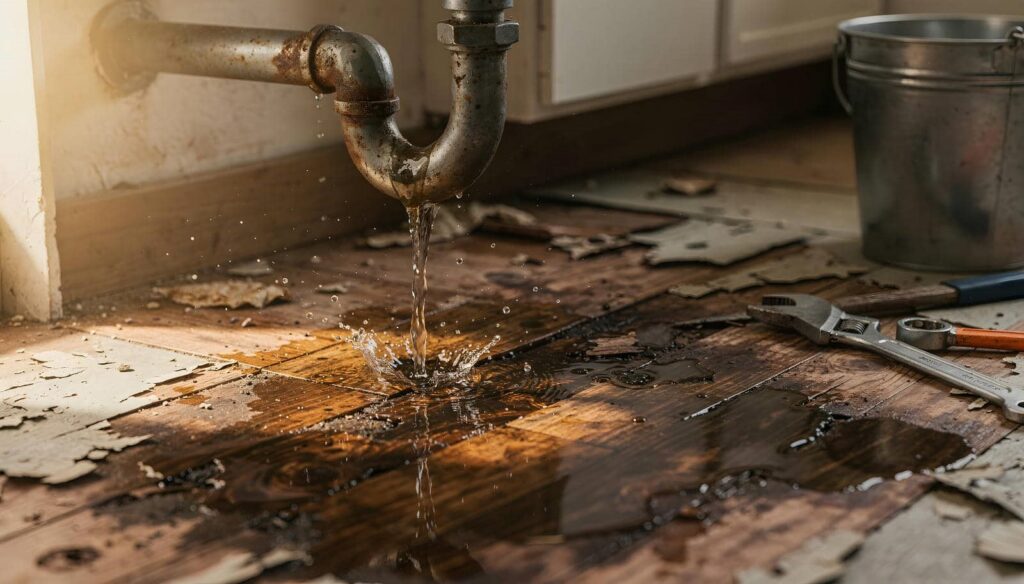
Imagine you come home to find water pooling from a burst pipe in your basement. It’s essential to act swiftly and methodically to minimize damage and ensure safety. Knowing how to assess the situation, take necessary precautions, and effectively remove water can make all the difference. Understanding each step can help you navigate this challenging scenario without further complications. What should you do first?
Key Takeaways
- Identify and assess damage immediately using visual checks and moisture meters to determine the extent of the leak.
- Ensure safety by shutting off electricity in the affected area and wearing personal protective equipment (PPE).
- Remove valuables and furniture, document damage with photos, and open windows to enhance airflow.
- Use a wet/dry vacuum for quick water removal and deploy fans and dehumidifiers to reduce humidity levels.
- Hire professionals for extensive damage, structural concerns, or if electrical systems are affected to ensure safe and effective restoration.
How to Identify and Assess Damage From a Burst Pipe
When a pipe bursts, identifying and evaluating the damage quickly is essential to minimize further issues. Start with effective pipe inspection techniques, such as visual checks and using moisture meters to locate hidden leaks. These methods help you determine the extent of water damage and identify affected areas.
Next, employ damage assessment methods like thermal imaging to evaluate structural integrity. This technology can reveal moisture trapped within walls or ceilings. Document your findings meticulously to facilitate communication with insurance providers or professionals.
What Safety Steps Should You Take Before Cleaning Up?
Before you start the cleanup process, it’s essential to ensure your safety and that of others nearby. First, assess the situation for any hazards like electrical connections or sharp debris.
Confirm your personal protective equipment (PPE) is on—this includes gloves, goggles, and boots to shield against contaminants. If the area is flooded, shut off the electricity to prevent shocks.
Have a first aid kit readily accessible as part of your emergency preparedness plan. Communicate with anyone in the vicinity about the situation, so they’re aware of potential risks.
Step-by-Step Burst Pipe Cleanup Guide
Once you’ve confirmed safety, it’s time to tackle the cleanup of a burst pipe methodically. Start by shutting off the main water supply to prevent further water damage.
Next, remove any valuables and furniture from the affected area to safeguard them. If possible, open windows to enhance airflow and reduce humidity levels.
After this, assess the extent of the damage. Take photos for documentation. Make sure you wear protective gear, including gloves and masks, to avoid potential hazards.
Use towels or mops to soak up excess water, and consider placing fans or dehumidifiers to facilitate drying.
Finally, implement preventive measures by inspecting your plumbing for vulnerabilities to avoid future issues.
How to Remove Water Efficiently After a Burst Pipe
After safeguarding the area and evaluating the damage, your focus shifts to removing water efficiently. Quick and effective water removal is vital to prevent further issues like mold growth.
Here are some effective drying techniques to take into account:
Use a Wet/Dry Vacuum: This tool is essential for removing standing water quickly from floors and carpets.
Apply Fans and Dehumidifiers: Increase air circulation and reduce humidity levels to promote faster drying.
Remove Furniture and Belongings: Elevate items from the wet area to prevent water damage and help with overall drying.
When Should You Hire Professionals for Burst Pipe Issues?
When should you consider hiring professionals for burst pipe issues? If you’re facing extensive water damage, it’s essential to seek emergency response services immediately.
Professionals have the tools and expertise to assess the situation, ensuring all water is removed and preventing mold growth.
If you notice structural concerns, like sagging ceilings or warped walls, it’s time to call in restoration services. They can address hidden damage and restore your home safely.
Additionally, if the burst pipe affects electrical systems or appliances, don’t hesitate to reach out for help. DIY attempts might exacerbate the problem, leading to costly repairs.
Trusting qualified experts ensures your home is restored efficiently and effectively, giving you peace of mind during a stressful situation.
Frequently Asked Questions
How Can I Prevent Future Burst Pipes in My Home?
To prevent future burst pipes, ensure proper pipe insulation and maintain consistent temperature regulation in your home. Check for drafts and seal any gaps, as fluctuating temperatures can lead to pipe stress and potential failures.
Are There Insurance Claims for Water Damage From Burst Pipes?
Yes, you can file insurance claims for water damage caused by burst pipes. Check your policy for specific coverage details, as it often includes damage from sudden incidents. Document everything to support your claim effectively.
What Materials Are Best for Repairing Burst Pipes?
For effective pipe repair, use PVC or copper fittings. In emergency plumbing, make certain you have epoxy putty and pipe clamps ready for quick, reliable fixes.
How Long Does It Take for Mold to Develop After Water Damage?
Mold growth can start within 24 to 48 hours after water damage occurs. To prevent serious health risks, you should act quickly to dry out affected areas and eliminate moisture to inhibit mold proliferation.
Can I Stay in My Home During the Cleanup Process?
You can stay in your home during cleanup, but it’s essential to prioritize safety precautions. If conditions worsen, consider temporary housing. Your well-being matters most—don’t risk turning your home into a hazardous zone.
Wrap-Up
Promptly addressing a burst pipe is essential to minimize damage and prevent mold growth. By following the outlined best practices, you can efficiently manage the cleanup process. However, if the situation feels overwhelming or the damage is extensive—like a ship lost at sea—don’t hesitate to call in professionals. Their expertise ensures a safe and thorough recovery, allowing you to restore your space with confidence and avoid future complications.