
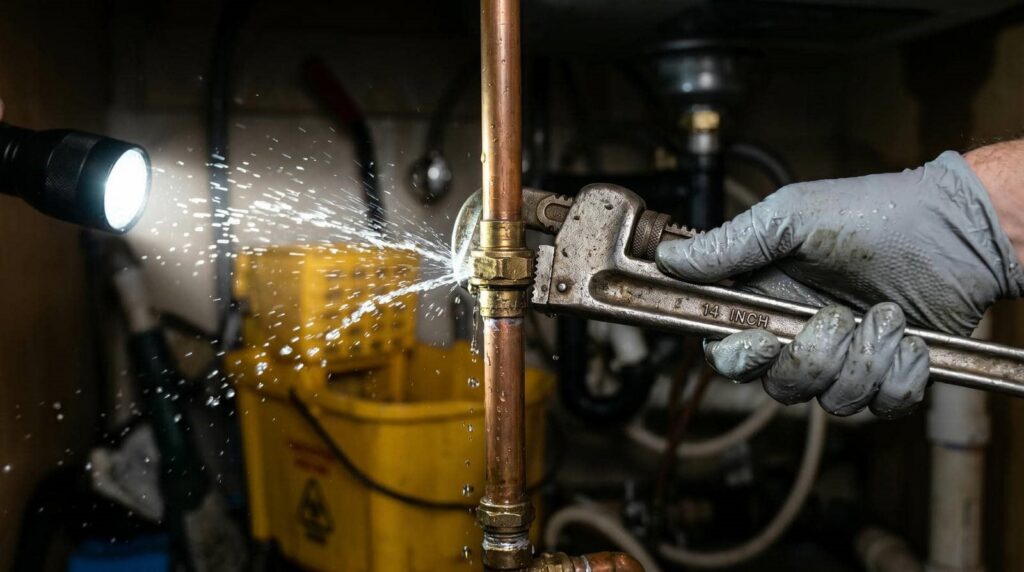
Like a ticking time bomb, a burst pipe can wreak havoc in your home if not addressed quickly. You need to act fast to minimize damage without draining your wallet. Start with simple steps that can make a significant difference, and ensure you have the right tools on hand. But what should you prioritize first? Understanding how to spot the signs of a burst pipe can save you time and money down the line.
Key Takeaways
- Shut off the main water supply immediately to prevent further flooding and minimize damage costs.
- Utilize towels or buckets to catch leaks and reduce moisture while you assess the situation.
- Temporary repairs with duct tape or rubber patches can provide a cost-effective, quick fix until professionals arrive.
- Invest in a basic pipe repair kit for future emergencies; it saves time and money in the long run.
- Regularly inspect and insulate pipes to prevent freezing and reduce the risk of future burst pipes.
How to Spot Signs of a Burst Pipe Early?
How can you identify the early signs of a burst pipe? Start by checking for leaky faucets; a constant drip can indicate underlying issues.
Next, inspect walls and ceilings for water stains, which often signal moisture buildup.
Pay attention to unusual water pressure changes; if your faucets suddenly sputter or run weakly, that’s a red flag.
Don’t overlook the sound of running water when all taps are turned off; that might suggest a hidden leak.
Additionally, monitor your water bill for unexplained increases, as this could point to a burst pipe.
Quick Fixes to Minimize Water Damage on a Budget
Once you’ve identified early signs of a burst pipe, taking swift action can help minimize water damage without breaking the bank.
Start by shutting off the main water supply to prevent further flooding. Use towels or buckets to catch any leaks and reduce moisture.
For temporary repairs, wrap the damaged section with duct tape or a rubber patch secured with hose clamps. If you have access to a plumber’s putty, apply it around the leak for added sealing.
Keep the area well-ventilated to help dry out any dampness and prevent mold growth.
Essential Tools for DIY Burst Pipe Repairs on a Budget
When tackling burst pipe repairs, having the right tools can make all the difference in achieving a successful, budget-friendly fix.
Start with a pipe repair kit, which usually includes clamps, sleeves, and sealants. These kits offer quick solutions without breaking the bank.
Essential plumbing tools like a pipe wrench, adjustable pliers, and a hacksaw are also vital for effective repairs.
Don’t forget a utility knife for cutting damaged sections and a bucket to catch any excess water.
While you might be tempted to skip tools, investing in these basics will save you time and hassle.
With the right equipment, you’ll feel empowered to handle emergencies and keep your home safe and dry.
When to Call Professionals for Cost-Effective Help?
While tackling burst pipe repairs on your own can save money, there are situations where calling in professionals is the most cost-effective choice.
If the damage is extensive or you can’t locate the leak, a professional’s expertise in pipe inspection will ensure a thorough assessment. They’ve the right tools and knowledge to handle complex issues, preventing further damage and costly repairs down the line.
Additionally, if you lack emergency preparedness or feel overwhelmed, it’s wise to seek help.
Remember, investing in professional services can save you from potential disasters and provide peace of mind.
When in doubt, it’s often best to rely on experts who can resolve the issue efficiently and effectively.
Preventing Future Burst Pipe Emergencies
Addressing burst pipe emergencies doesn’t just stop at repairs; taking proactive measures can greatly reduce future risks. One key strategy is installing pipe insulation. This helps maintain consistent temperatures, protecting your pipes from freezing in colder months.
When you insulate your pipes, you’re not just preventing damage; you’re also saving on energy costs.
Additionally, don’t overlook the importance of seasonal maintenance. Regularly inspect your plumbing for leaks, corrosion, or other vulnerabilities.
Every fall, verify your outdoor faucets are winterized, and check for any signs of wear and tear on your pipes. By integrating these practices into your routine, you cultivate a secure home environment, fostering a sense of belonging and safety for you and your loved ones.
Frequently Asked Questions
What Are the Common Causes of Burst Pipes?
Common causes of burst pipes include frozen pipes, aging infrastructure, high water pressure, poor insulation, temperature fluctuations, and invasive tree roots. Understanding these factors helps you prevent potential damage and maintain your plumbing system effectively.
How Can I Temporarily Turn off My Water Supply?
To temporarily turn off your water supply, locate the main water shutoff valve, usually near the meter. Turn it clockwise until it stops. This emergency tip can prevent further damage while you assess the situation.
Will Homeowner’s Insurance Cover Burst Pipe Repairs?
Yes, homeowner’s insurance often covers burst pipe repairs, but it depends on your policy’s coverage limits. Review your insurance claims policy to understand what’s included and ensure you’re adequately protected against unexpected damages.
How Long Does It Take to Repair a Burst Pipe?
Repairing a burst pipe can feel like racing against time, typically taking one to four hours. With proper emergency preparedness, you can minimize damage and streamline the repair duration, ensuring a smoother recovery process.
Can I Use Duct Tape as a Temporary Fix?
Yes, you can use duct tape as a temporary fix for a burst pipe. Its effectiveness varies, but it can help reduce leaks until a professional repair is made. Always follow up with permanent solutions.
Summary
In a burst pipe emergency, think of your home as a ship—every leak is a potential hole that can sink it. By acting quickly and using budget-friendly solutions, you can patch those leaks effectively. Equip yourself with essential tools and know when to reach out for professional help. Implementing preventative measures will keep your ship sailing smoothly, ensuring you avoid costly repairs and maintain the integrity of your home for years.